


A landmark anniversary programme at Leighton House will give groups the chance to discover the story behind London’s stunning Arab Hall.
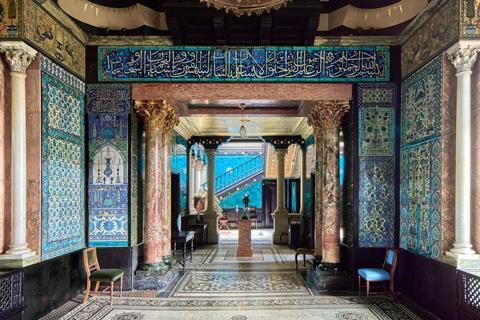
From the spring, a new exhibition will open tracing the origins and creations of the Arab Hall, which is the centrepiece of the unique artist home in the Holland Park area of London. There will also be a specially commissioned short film for visitors to watch along with three fascinating art installations throughout the year.
Once the home of Victorian artist and former president of the Royal Academy Frederic Lord Leighton, Leighton House is described as Kensington’s own ‘national treasure’ which opened to visitors in 2022 following a major redevelopment project.
Opening on 21st March, The Arab Hall: Past and Present will give visitors a unique opportunity to delve into this particular room’s fascinating history and encourage reflection on its significance in today’s world.
Highlights of the 100th anniversary celebrations
Newly uncovered evidence and important drawings
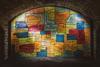
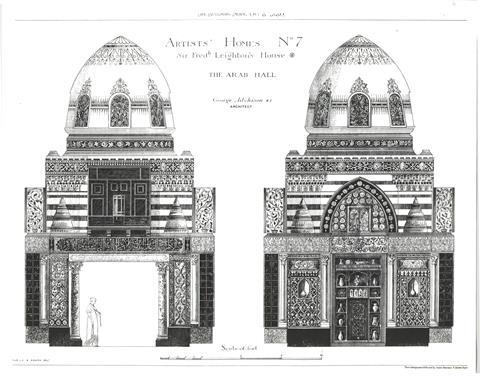
An exhibition in the museum’s Tavolozza Drawings Gallery will trace the origins and creation of the Arab Hall (constructed between 1877 and 1881), revealing the influences, collaborations, and craftsmanship behind the stunning space.
Featuring original designs by architect George Aitchison, ceramicist William De Morgan and illustrator Walter Crane, alongside works by Leighton and ceramics from his own collection, the display will offer visitors a window into the collaborative process that brought the Arab Hall to life.
New research by Dr Melanie Gibson shows that Leighton started planning the space as early as 1870 - several years before work started on its construction and well before he was elected president of the Royal Academy.
Newly uncovered evidence also highlights the significance Leighton placed on the room during his lifetime, including hosting visits from the Prince and Princess of Wales and Prime Minister William Gladstone.
An immersive film
A new short film, When the Tiles Spoke (created by award-winning filmmaker Soudade Kaadan) will also take viewers on an immersive, emotional journey through the Arab Hall, bringing the tiles to life and allowing them to tell their own story for the first time.
“The Arab Hall has an extraordinary capacity to surprise, delight and inspire.”
Daniel Robbins, senior curator of Leighton House and Sambourne House
Art installations
From 21st March to 15th May, Atlas of An Entangled Gaze, by London-based Lebanese artist Ramzi Mallat will explore the subtle power dynamics in the Arab Hall. Comprised of thousands of blue-glazed ceramic Syriac evil-eye charms, the piece will appear suspended from the room’s central chandelier hanging over the fountain.
From 15th May to 31st July, British Bangladeshi artist Kamilah Ahmed will present Facets in Resonance, a mixed-media embroidered textile arch, which will sit over the fountain in the Arab Hall, framing a new view on the space.
The final installation will From Water, Every Living Thing by calligrapher and artist Soraya Syed, the first Briton to be awarded an icazetname, a traditional licence certifying mastery in Islamic calligraphy. On display from 31th July to 4th October and installed at the heart of the space, the work will take the fountain as its conceptual and architectural point of origin.
About the Arab Hall
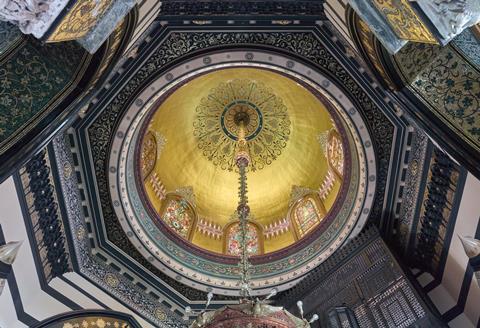
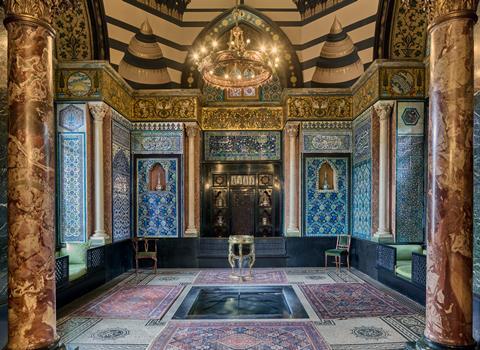
Created by Victorian artist Frederic Leighton (1830-1896) following extensive travels across North Africa and the Middle East, the Arab Hall was conceived as a spectacular extension to his Kensington studio-house – a blend of Islamic, Mediterranean and Victorian craft traditions, the centrepiece of which is the collection of antique tiles from Damascus, Turkey and Iran which line its walls.
Since its completion in 1881, the Arab Hall has become an important place for discovery and debate, for contemplation and creativity that continues to resonate with visitors, researchers and creatives today.
Daniel Robbins, senior curator of Leighton House and Sambourne House, said: “The Arab Hall has an extraordinary capacity to surprise, delight and inspire.
“Through this innovative programme, we want to bring new focus to its history and importance, presenting new ways to engage and interact with a space which has never seemed more relevant and significant to our audiences.”
For more information about group visits to Leighton House and its sister attraction, Sambourne House, go to www.rbkc.gov.uk/museums/visit-us