




Hand-painted plaster casts of the medieval embroidery will be on display at several locations around the country, bringing the Norman Conquest story to life.

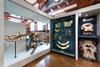
The first stop on the Bayeux Around Britain tour is Hastings Museum and Art Gallery where three rare casts of details from the famous Bayeux Tapestry will be on display until November.
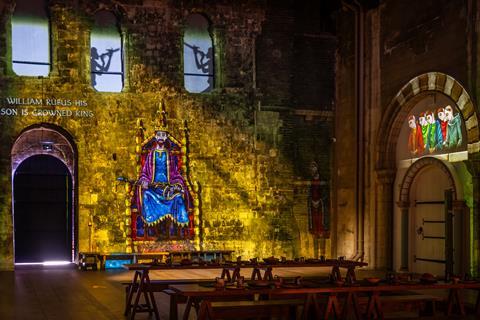
Norwich Castle Museum & Art Gallery is the second venue on the tour, with the exhibition running until January 2027. The casts will be among other Norman objects related to the tapestry with the display being hosted in the castle’s recently refurbished 900-year-old Norman Keep.
Other destinations include the National Library of Wales, Rievaulx Abbey in North Yorkshire, Scotland, and Rochester Cathedral in Kent.
Rarely on public display, the three plaster casts will bring visitors close to the Tapestry, which is on display at the British Museum until July 2027, and connect them with the original embroidery and those who made it.
Casting a masterpiece
The medieval 70-metre Bayeux Tapestry, telling the dramatic story of the Norman invasion of England in 1066, has been the source of many interpretations over the years.
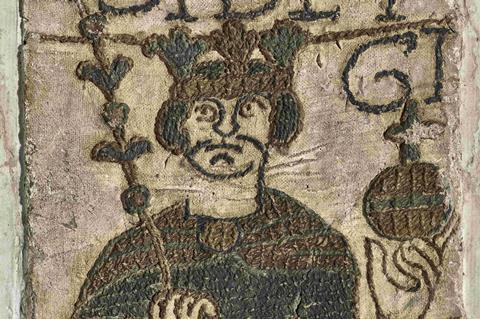
In 1816, English artist, Charles Alfred Stothard was employed by London’s Society of Antiquarians to produce the first complete coloured drawing of the tapestry. Having studied the depictions, Stothard took wax moulds of the embroidery by applying wax, and from the moulds made a series of plaster casts. Three of these casts were later acquired by the British Museum in 1878.
Stothard’s three casts feature Harold Godwinson, king of England from January to October 1066, and Duke William of Normandy, who defeated Harold at the battle of Hastings and seized the English crown. The cast to the left is taken from scene 46 of the Tapestry, in which William hears news of Harold’s whereabouts. The central cast, from scene 30, shows Harold at his coronation. To the right, from scene 48, William wears full armour and holds a spear.
The life-size 3D printed replicas by Stothard allow visitors to touch and feel the impressions of the fine cast. There are also a series of hand embroidered replicas to let visitors feel what the actual tapestry may feel like.
Most ambitious programme for a museum in the UK
Dr Nicholas Cullinan OBE, director of the British Museum, said: “We have been working with colleagues around the UK to deliver a programme of loans and activity that will extend far beyond London to make this a truly national moment.
“This is perhaps the most ambitious and inclusive programme we or in fact any museum in the UK has done, bringing together over 60 partners across the UK and Channel Islands. It’s only right that Hastings, a place steeped in history and shaped by the seismic events depicted in the Tapestry, should be the first stop for our Spotlight Loan. I’m delighted that this 19th-century cast can travel far and wide and be accessible to thousands of people around the UK.”
The Bayeux Tapestry in London
The Bayeux Tapestry is on show at the British Museum from 10th September until 11th July 2027. The piece is being displayed flat in one continuous length for visitors to admire, alongside items from the British Museum’s own collection to help put the tapestry into broader context of medieval England.
It is the first time the tapestry has been in the UK since it was made, almost 1,000 years ago.
An illustrated manuscript has been loaned by the University of Oxford for the exhibition, believed to have been borrowed by the tapestry’s creators for their depictions.
Groups of up to 10 people can book tickets online when further ticket releases become available.
Sign up to the British Museum’s newsletter for information on new tickets to see the Bayeux Tapestry here. Read about the list of venues at britishmuseum.org