




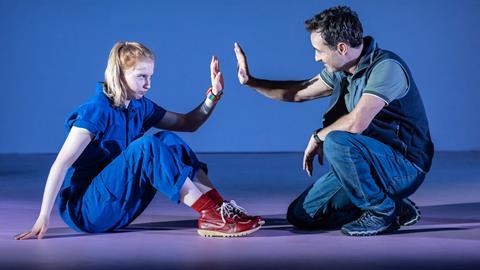


Murder mystery meets heartfelt coming-of-age story for the modern day - Alice Tegg reviews The Curious Incident of the Dog in the Night-Time at Milton Keynes Theatre.
“What have you done to my dog?!”
As the red curtain rolls up, there’s no time to settle in as we’re thrown into the scene of a murder. But who did it, and who will solve the mystery? Our unlikely hero comes in the form of neurodivergent teenager Chris Boone, whose pure heart and logical, unfiltered brain makes her the perfect sleuth for the case.
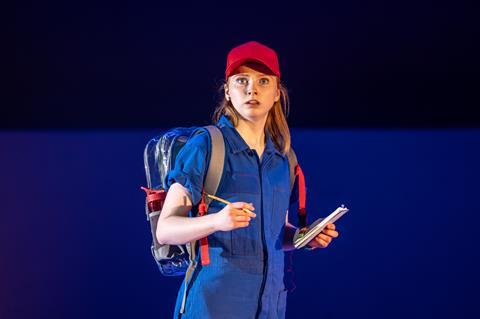
Alex Keenan (alongside alternate Imi Price) is leading the cast of The Curious Case of the Dog in the Night-Time, currently touring the UK until May 2027. This is the first time the role of Chris has been played by a woman, offering a fresh perspective on the character by highlighting the female experience of autism and the under-representation of neurodiverse women and girls in mainstream media.
The heart of the story, based on the multi-million-selling novel by Mark Haddon, is the same. The stage adaptation premiered at the National Theatre in 2012 and has become one of the most successful and acclaimed British plays of the 21st century. Directed by Ned Bennett, this new production also features EastEnders’ favourite Charlie Brooks and Holby City star Joe McFadden in the roles of Chris’ parents, Judy and Ed.
Despite starting under the guise of a classic whodunnit, the true story starts to reveal itself as Chris digs for answers. Her matter-of-fact approach when directing questions at her neighbours sits in stark contrast to their coy and over-thought replies, highlighting the sheer number of white lies we tell and accept on a daily basis in an attempt to do the right thing or manage the feelings of others. As the truth starts to come out, it makes you wonder - which approach is truly kinder?
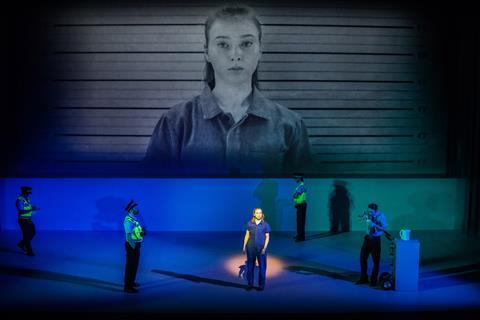
It’s a gripping drama that moves at pace, with lighthearted humour mixed in. Throughout the first act, secrets unfold and answers only lead to more questions for Chris. The second act feels more emotional. We see Chris tackle huge challenges and face difficult conversations as life as she knows it turns upside down. It’s insightful to watch everyday moments like getting on the tube and taking cash out played out as extreme obstacles for Chris to get past, and I felt myself genuinely moved when she overcame them.
You’d never guess this is Keenan’s first professional acting role. Fresh out of drama school, she totally embodied the complex character with confidence and ease. She sensitively portrayed the behaviours typical in individuals with autism and handled highly emotional moments with a maturity that you’d expect from a seasoned actor.
The story is told through a mix of dialogue and narration as Chris’ teacher Siobhan (played by Bridgette Amofah) reads out her writing assignment about the murder and the events that followed. I really enjoyed this approach because it felt like we were getting Chris’ full perspective on her experiences. Brooks and McFadden did an excellent job of presenting the (somewhat stigmatised) struggles that parents of neurodiverse children face, from managing feelings to admitting moments that embarrassed them.
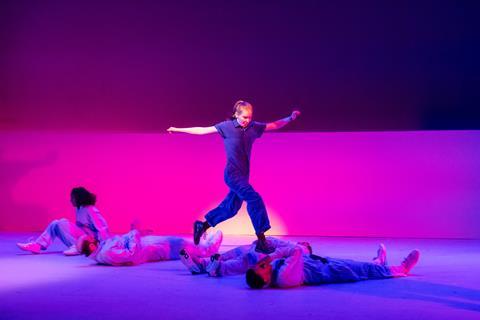
It’s the set design that really intrigued me. In fact, there’s really only one set, a vast empty space with a tall shelf at the back that runs from one side of stage to the other. Instead of using complex and detailed staging to set the scene, changes in location, time and tone are used through props, lighting and even people. There’s an eight-strong ensemble cast who play everyone from Chris’ neighbours to London commuters, and they even form parts of the scenery when needed.
A stand-out moment was when dozens of yellow balls dropped from the ceiling, each one representing a different hazard or overwhelming detail in Paddington Station, with the ensemble throwing the balls around and shouting out each hazard as Chris tries to make her way through the chaos. It was a unique and highly effective way of portraying the feeling of sensory overload.
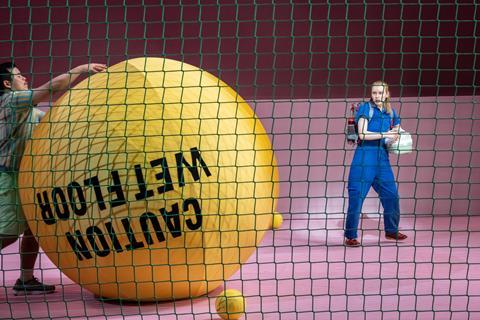
The use of colour is also very clever. Early on we find out that Chris’ favourite colour is red but she absolutely hates anything that is yellow. Changes in the lighting colour reflect Chris’ feelings in a scene. Hues of red are used in her more content moments, while the stage is drenched in yellow (note the yellow balls as well) when she feels upset or hurt. Colours shift seamlessly as the story unfolds, just as her feelings shift almost subconsciously.
I wasn’t sure how to feel about the stark set at first, but what they’ve been able to convey through alternative techniques is quite remarkable and unlike anything I’ve seen on stage before. It genuinely feels like you’re inside her brain.
Heart and humour come together in this inventive coming-of-age story, with a powerful message that what makes us different can be a strength. I feel like I walked out of the theatre with more understanding of those around me - surely a sign of a job very well done.
The Curious Incident of the Dog in the Night-Time is heading to theatres across the UK until May 2027, with upcoming venues including Manchester Opera House, Liverpool Empire and Bath Theatre Royal.
We saw it at Milton Keynes Theatre where it is performing until 10th October.
Find tickets and venues at curiousonstage.co.uk.
See what else is coming to Milton Keynes Theatre at miltonkeynes-theatre.co.uk.