


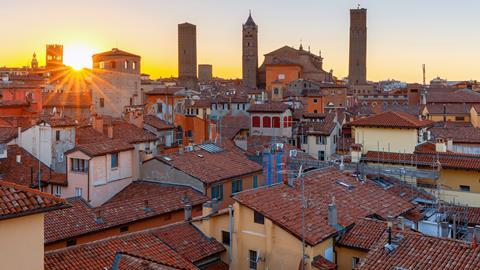

The capital of Italy’s Emilia-Romagna region is famous for its medieval red-roof architecture, expanses of porticoes and local specialities such as tortellini and ragu.
Bologna is a city that will appeal to groups of foodies, history enthusiasts and those seeking to discover an authentic Italian experience with fewer crowds than Rome, Florence and Milan.
Explore old Bologna
An entire day can be devoted to the historic buildings and streets of the old town. Begin your day on Via Indipendenza, the city’s main street which was completed at the end of the 19th century and is home to the city’s shopping and important places of culture, such as the Arena del Sole, Bologna’s historic theatre.
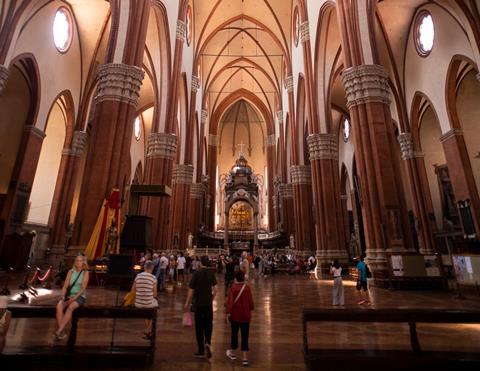
The heart of the old town is Piazza Maggiore. Dating back to 1200, it is overlooked by the Basilica of San Petronio which groups can visit with a pre-booked reservation to learn about the art and history.
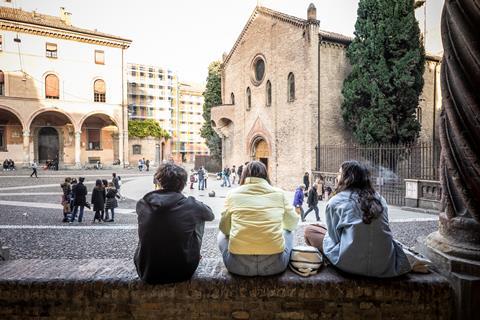
Head to the university district which houses the University of Bologna founded in 1088, making it the oldest university in continuous operation in the world. In the area groups can explore the university’s network of 14 museums showcasing scientific and historical collections.
The main hub is Palazzo Poggi Museum, which features exhibits on anatomy, physics, natural history, and geography. Groups of ten or more should let the museums know they are visiting in advance and guided tours are available.
Travelling to Bologna
Groups can reach Bologna via direct flights from London Heathrow, London Stansted, London Luton and Manchester, with flights from London taking roughly two hours 15 minutes.
Those looking to travel to Bologna more slowly can travel via train from London, passing through Paris and Turin during a two-day scenic journey.
Groups can spend time at the Jewish Ghetto in the heart of the medieval city which still has its original maze of alleys, suspended passages, covered bridges and small windows.
The city’s two towers, Asinelli and Garisenda, are recognised as symbols of the city and were built during the middle ages. Visitors can climb Asinelli Tower’s 498 steps for views over the red roofs of Bologna.
Savour traditional food
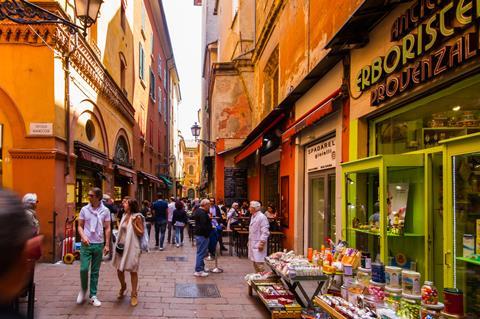
Known for its food and wine culture and home to pubs, taverns, opulent restaurants and fresh food markets, a visit to Bologna would not be complete without experiencing the flavours of the region. The city has introduced dishes including mortadella sausage, tagliatelle al ragù and tortellini in brodo, all made from high-quality local ingredients
Quadrilatero Old Market is the oldest part of the city and every day there are stalls selling fresh pasta, fish, meat, fruit and vegetables.
Groups can learn how products such as fresh pasta and ragu are made by taking part in group-friendly Cesarine cooking schools. Alternatively, Portici Academy offers tailor-made cooking classes in English, teaching the tradition of making fresh pasta.
Bologna is home to a number of group-friendly restaurants including Cantina Bentivoglio which serves up fresh pasta dishes and daily jazz concerts and Trattoria dal Biassanot where groups can savour traditional Bolognese dishes including lasagna, tortellini and tagliatelle.
Group friendly hotels
Admire networks of porticoes and canals
In 2021 Bologna’s extensive 62km network of porticoes were added to the UNESCO World Heritage Site list and visit to the city would not be complete without exploring some of them.
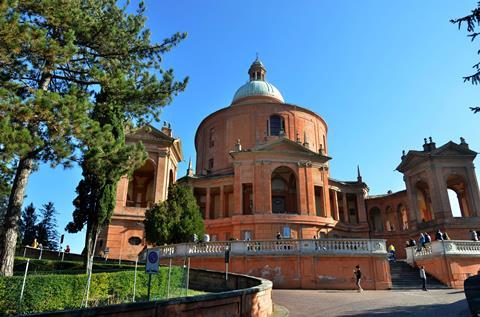
Walk the the Portico di San Luca, recognised as the longest portico in the world stretching almost four kilometres to Basilica di San Luca, a prominent religious and architectural site overlooking Bologna dating back to the 18th century. Groups can can climb to the top of the dome at the Basilica to see over the city.
Bologna’s canal system was once used for silk and textiles industries and most of the waterways are hidden underground. Visitors can explore stretches of the medieval network which are still visible in the city as part of a themed group tour. Highlights include the Finestrella di Via Piella, a small viewing window on the Canale delle Moline, overlooking the canal.
The Museum of Industrial Heritage and the Opificio delle Acque offer exhibitions on the city’s hydraulic history and storytelling sessions along the canal banks gives visitors the opportunity to learn about Bologna’s past.
Traverse Bolognese countryside
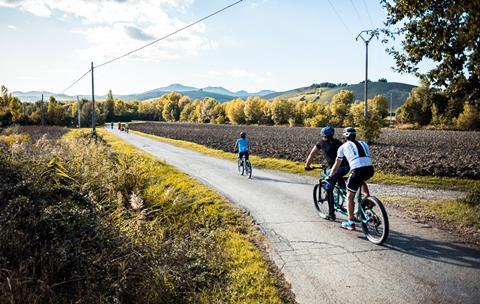
The countryside around Bologna is traced by bike lanes following the old Via Emilia, a key Roman road which leads into the surrounding region from the city. The paths pass through vineyards and clay gullies where groups can stop for wine tastings, cellar tours and guided walks.
E-bike tours are available for groups in the Bolognese hills, covering 30km to some of the landmarks of the area, including the Reno Canal, the Sluice of Casalecchio, San Luca and its porticoes.
For more inspiration for things to do in Bologna, visit www.bolognawelcome.com.