


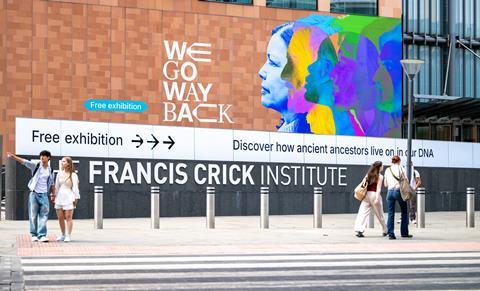
A fascinating new free exhibition at the Francis Crick Institute takes visitors on a journey through Britain’s genetic past, from Neanderthal encounters to the Roman period and groups are welcome to pre-book an introductory tour.
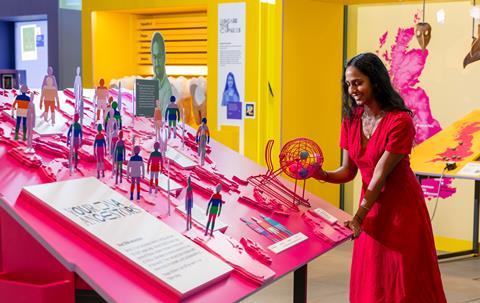
Guided by researchers in the Crick’s Ancient Genomics Laboratory, visitors to We Go Way Back will journey into the past, embarking on a whistle-stop tour of changing British populations throughout the centuries.
Working with over 100 museums and heritage sites, the lab has built a bank of more than 1,000 ancient genomes from people who lived in Britain during the past 4,500 years, and the exhibition brings some of those individual stories to life.
Mary Beard, classicist and broadcaster, a member of the exhibition’s steering group, has described ancient DNA as having the potential to “transform some important parts of our understanding of the past, potentially rewriting what we used to consider fact.”
What ancient DNA can tell us
Ancient DNA is the genetic material from our ancestors long gone. These fragments of DNA are extracted from bones and teeth, before being processed in a laboratory and sequenced to reveal the underlying genetic code.
Since early extractions of ancient DNA in the 1980s, the field has expanded and matured, even more so after the boom in genetic sequencing in the 2010s. Still, it’s said to be a relatively new discipline on the cusp of making big discoveries.
The work carried out at the Francis Crick Institute’s Ancient Genomics Laboratory, headed up by senior group leader Pontus Skolgund, helps our understanding of ancient and modern disease. The team deploy robotics to process hundreds of samples a month and are developing new computer models to make sense of the growing number of human and pathogen genomes the lab has identified.
About the exhibition
We Go Way Back, which is free to visit, runs until 2nd July, 2027, with an events programme featuring panel discussions and talks with classicist and broadcaster Mary Beard, Pontus Skoglund and other leaders in historical and scientific research.
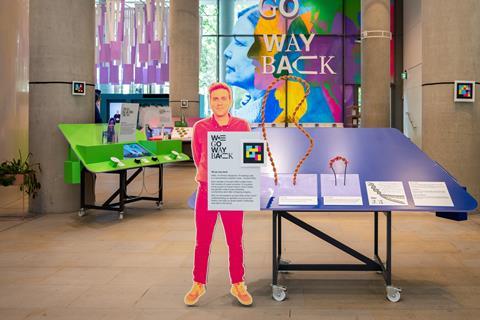
Visitors will experience first-hand how ancient DNA gives insight into medicine today, from the identification of a key gene behind inflammatory bowel disease that was present in our ancient ancestors, to understanding how bacteria and viruses have evolved alongside us.
They’ll be able to search for pathogen DNA from model teeth, to learn more about how a given disease has evolved, and watch discoveries played out with shadow puppetry.
A holographic artwork, Portals: Windows into Human Heritage, by Sheffield-based artist Grace Lee, will feature in the exhibition and invite visitors to give their own reflections.
Piecing together parts of the puzzle
Kat Nilsson, curator of We Go Way Back, said: “As visitors move through the exhibition, they’ll put together the puzzle of a family tree, unscramble the identities of diseases which plagued our ancestors and piece together evidence revealing two ancient people’s stories.
“I’m keen for them to appreciate that Pontus and his team are adding new puzzle pieces to our shared story all the time, tracing how we’ve migrated, picked up new genetic changes and lived alongside with bacteria and viruses over hundreds of thousands of years.”
Groups are encouraged to pre-book their visits by emailing engage@crick.ac.uk so that the team can organise a short introductory tour of the exhibition. For more information click here.