
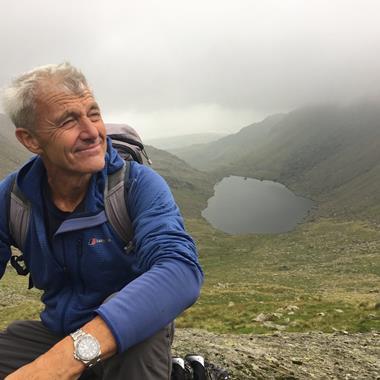

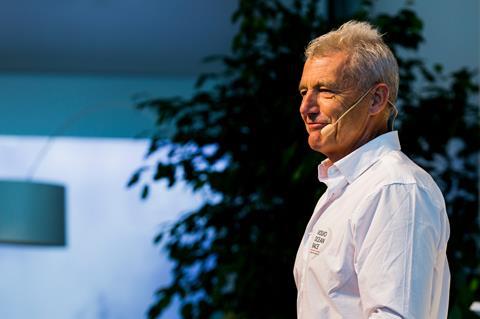
World-renowned explorer, broadcaster and National Geographic Pristine Seas expedition head Paul Rose talks to Group Leisure & Travel about his love of the UK, the responsibility of travel, and why leading a group tour isn’t so different from running a polar expedition.
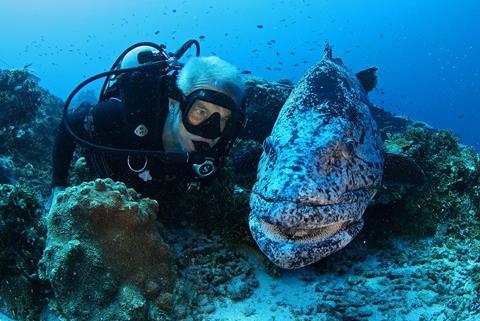
Expeditions in the Antarctic, deep sea dives and missions in remote and challenging parts of the planet – Paul Rose has done it all. But his joy for travel began much closer to home with a trip to the Brecon Beacons as a schoolboy and at Portland Bill in Dorset, where he experienced his first dive.
In fact, despite having ventured around the globe, Paul loves exploring the UK. He told us: “The UK is amazing. Everything is just so accessible. You can be on the coast, in the forests, on rivers or in the mountains very quickly.”
The joy and responsibility of travel
The Lake District is on the list of places that bring him joy – and many of us saw his passion for the area in the four-part BBC series The Lakes that Paul presented. Citing Devon, Cornwall and the Norfolk Coast (for sailing), Paul tells us he is a self-confessed “enthusiastic traveller”. He also feels as travellers we have a sense of responsibility to be “informed” about where we are travelling to, and how those places link into the global issues affecting all of us.
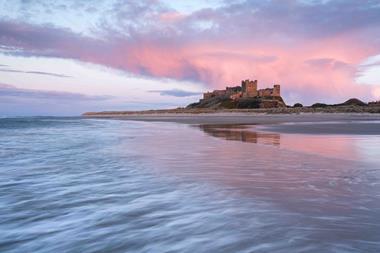
He explained: “It’s good for individuals and society if we all see for ourselves what’s going on in the world. So, if we go to the British coastline and have a walk, maybe we think about the power of nature, or how we need to look after the coastline.
“It’s healthy for us to realise that when we travel, it’s a great pleasure, but it’s also a bit of a responsibility. It helps us keep a focus on global issues such as climate change, the loss of biodiversity, loss of habitat, over pollution, and over extraction of natural resources.”
“It’s when we stop and say ‘I had no idea how big that was’, or ‘I had no idea how I would feel walking into this place’. It’s also about experiencing those moments with the people we travel with, and their input.”
Group travel and sustainability
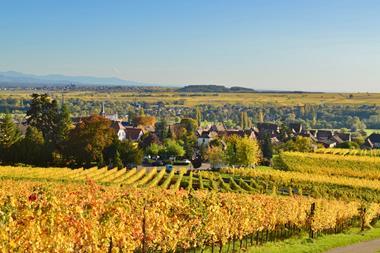
And how does that relate to group travel? Well, as Paul so passionately explained, group travel is actually a sustainable way of travelling: “You have the energy the group brings and can have some great discussions. For example, if you’re doing a vineyard tour, you can learn about the history of the vines, how old the vines are and perhaps think about the planting of the vines and the sustainability focus, and discuss it all on the way home.”
Although extremely modest, Paul is one of the world’s most accomplished science expedition leaders. Currently head of expeditions for National Geographic Pristine Seas, which has completed 43 expeditions all over the globe and helped to protect over 6.6 million square kilometres of ocean, Paul is a former vice president of the Royal Geographical Society, which awarded him its Founder’s Medal and Ness Award.
A defining expedition to the Antarctica
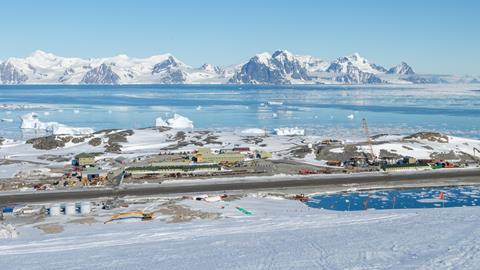
Paul even has a mountain named after him in Antarctica, where he spent a decade as a base commander of the Rothera Research Station. But it was his first ever trip to Antarctica in 1992 that shaped his career. He told us: “There is something indefinable about being in Antarctica for the very first time. You realise just how vast it is, how pristine it is and appreciate how complicated it is to get supplies in and out, all in support of science.
“It underscored my love of field science and really began my journey of broadcasting. We talk about global issues as if we know everything about them, we see numbers all the time about what’s happening on Earth, but we need to understand that they relate to real people and real issues.”
Interestingly, Paul draws a lot of parallels between running expeditions and being a group travel organiser. He explained: “You’ve got a lot of people on a mission, and everybody has their own version of what’s going to happen but as the group leader, it’s down to you to actually make it happen. And the single trick I have is to always have one single aim and a load of supporting objectives.”
Moments to stop and take it all in
It’s fair to say Paul has had some incredible travel experiences. Living in Switzerland, he loves the “Swiss alpine life”, and also picks out Greenland, the North Cascades National Park in America and the southwest Pacific as some of his favourite places.
But it’s those moments where we “stop and see something for ourselves” that turn good experiences into unforgettable memories. He said: “It’s when we stop and say ‘I had no idea how big that was’, or ‘I had no idea how I would feel walking into this place’. It’s also about experiencing those moments with the people we travel with, and their input.
“Maybe a group goes to the Sistine Chapel and think they know a lot about it, all the facts, history etc, but it’s only when you get in there, stand still and look at the ceiling, that you create those wow moments. When I went, I laid down for ages just looking at the ceiling. Those moments underscore the value of travelling.”
Paul will join travel journalist, Simon Calder and Antiques Roadshow regular Eric Knowles in the free-to-attend Seminar Theatre at the Group Leisure & Travel Show which takes place on Thursday 8th October at the Arena MK, Milton Keynes, next to Stadium MK.
Free visitor registration is open at grouptravelshow.com/register